IN OTHER LANGUAGES

Why vitelline membrane integrity matters | PlusVet Animal Health
Expertos en fitobióticos y salud digestiva
PlusVet Animal Health, feed additives, feed additives, plant extracts, essential oils, phytobiotics, phytochemicals, phytogenics, replace antibiotics growth promoters, natural products, digestive health, poultry, poultry, swine, pigs, ruminants, aquaculture, rabbits
39971
wp-singular,post-template-default,single,single-post,postid-39971,single-format-standard,wp-theme-bridge,bridge-core-3.3.4.7,qi-blocks-1.4.9,qodef-gutenberg--no-touch,qode-optimizer-1.2.2,qode-page-transition-enabled,ajax_fade,page_not_loaded,qode-page-loading-effect-enabled,,qode-title-hidden,side_area_uncovered_from_content,footer_responsive_adv,hide_top_bar_on_mobile_header,qode-smooth-scroll-enabled,qode-theme-ver-30.8.8.7,qode-theme-bridge,qode_header_in_grid,wpb-js-composer js-comp-ver-7.1,vc_responsive,elementor-default,elementor-kit-1,elementor-page elementor-page-39971

Why vitelline membrane integrity matters

PlusVet Animal Health, feed additives, feed additives, plant extracts, essential oils, phytobiotics, phytochemicals, phytogenics, laying hens, layers, breeders, poultry, broilers, chicks, chicken, zinc, saline water, sodium chloride, egg quality, eggshell, yolk, cracked eggs, cracks, shell, laying rate, egg production, defective eggs, fractures, selenium, magnesium, manganese, zinc, LIVER, fertility

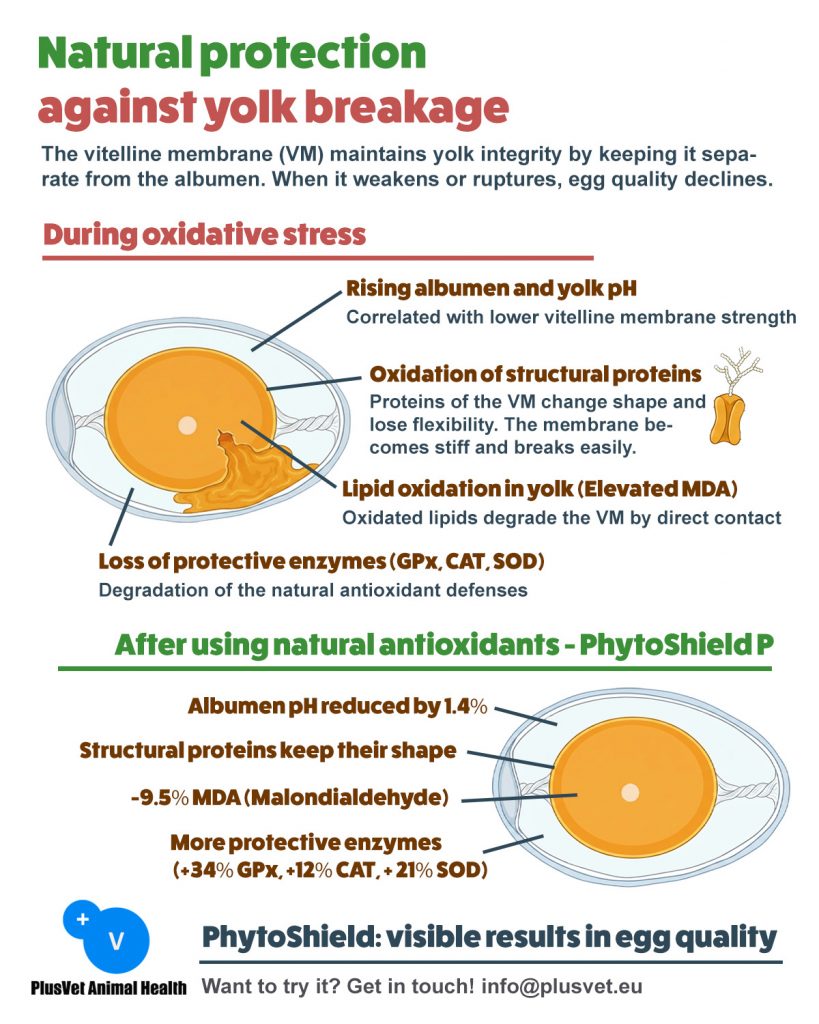
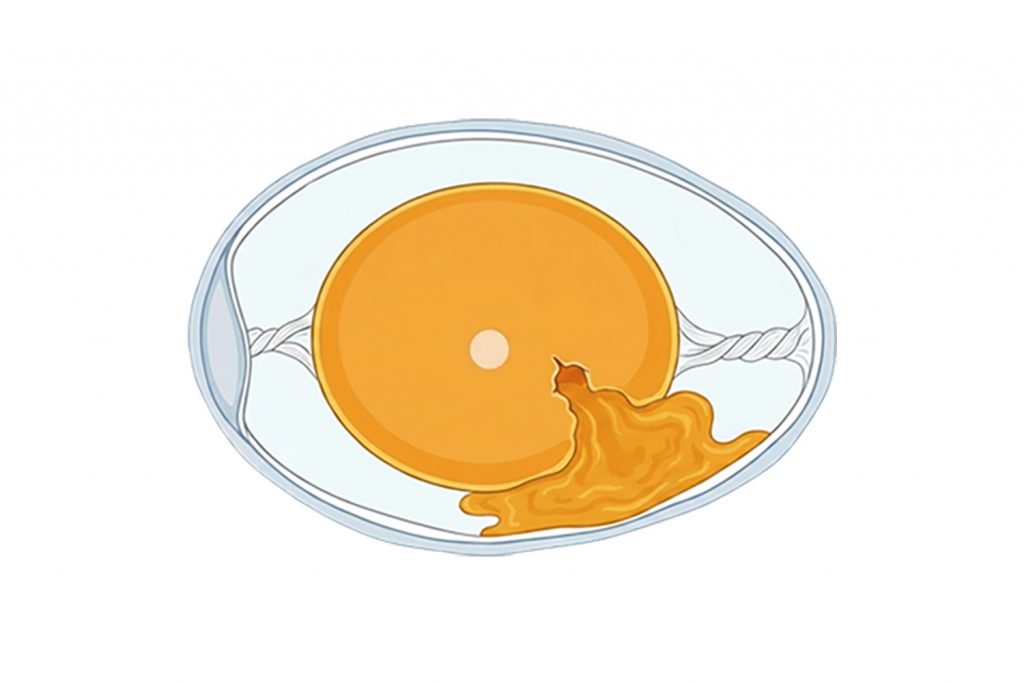
The vitelline membrane (VM) is a thin but essential structure that surrounds the egg yolk and keeps it separated from the albumen. Its integrity is critical for maintaining egg quality. When the membrane weakens or ruptures, the yolk loses its structure, spreads easily, and the overall egg quality declines.

This phenomenon is not only a quality issue in table eggs but also a major technological constraint in egg processing, particularly in the production of egg powder.

Oxidative stress: a key factor of yolk breakage

Oxidative stress occurs when there is an imbalance between reactive oxygen species (ROS) and antioxidant defenses in the hen.

This imbalance:

  • Weakens membrane structure before the egg is even laid
  • Reduces antioxidant reserves in the egg
  • Accelerates deterioration during storage


Ways in which oxidative stress weakens the vitelline membrane:

    1. pH increase and protein degradation

Eggs from hens under oxidative stress tend to show a higher albumen pH. Furthermore, albumen and yolk pH increase naturally over time during egg storage. At a high pH:  

  • Structural glycoproteins (e.g., ovomucin) degrade
  • Protein networks lose cohesion and elasticity

This leads to a reduction in membrane strength and resistance to rupture.

    1. Oxidation of structural proteins

The VM is composed of a protein matrix that provides flexibility and tensile strength.

Under oxidative stress:

  • Proteins undergo carbonylation and cross-linking, which lead to structural conformation changes
  • The membrane becomes rigid and brittle

As a result, it cannot withstand mechanical stress during handling or processing.

    1. Lipid oxidation in the yolk (MDA increase)

The yolk is rich in polyunsaturated fatty acids (PUFAs), which are highly prone to oxidation.

  • Reactive oxygen species (ROS) trigger lipid peroxidation
  • Oxidation by-products such as malondialdehyde (MDA) accumulate
  • These compounds directly damage the membrane at the yolk-VM interface

This process weakens the boundary layer and reduces VM elasticity.

    1. Loss of natural antioxidant protection

Eggs naturally contain antioxidant enzymes such as:

  • Glutathione peroxidase (GPx)
  • Catalase (CAT)
  • Superoxide dismutase (SOD)


Under oxidative stress:

  • These defenses are reduced
  • The egg becomes more vulnerable during storage
  • Membrane deterioration accelerates

Main causes of oxidative stress in laying hens

The most common triggers include:

  • Heat stress (high environmental temperatures)
  • Oxidized or poor-quality fats in feed
  • Mycotoxin contamination
  • Disease challenge and immune activation
  • Vaccination stress
  • Advanced age of hens
  • Poor environmental conditions (e.g., ammonia, air quality)

These factors increase ROS production and compromise egg quality at its origin.

Natural solution: PhytoShield P

The use of natural antioxidants is a practical strategy to mitigate oxidative damage and protect the vitelline membrane.

Results obtained after using PhytoShield P for two months:

  • Albumen pH reduced by 1.4%
  • Structural proteins maintain their shape
  • −9.5% MDA (reduced lipid oxidation)
  • Improved antioxidant enzyme activity:
    • GPx: +34%
    • CAT: +12%
    • SOD: +21%

These results translate into:

  • Stronger vitelline membrane
  • Reduced yolk breakage
  • Better internal egg quality
  • Improved processing performance
  • Higher consistency in egg powder production

Products of choice

PhytoShield© is an oral emulsion that contains essential oils, electrolytes and vitamins intended to promote growth, reduce oxidative stress, and keep the animals hydrated.

Do not miss any of our articles!

Subscribe to our monthly newsletter

Would you like further information?

We are at your service!

Certain health statements may not be applicable in your region. Copyright 2025© PlusVet Animal Health